Après une première campagne réussie pour l’entreprise mauritanienne CDS, I&P s’associe de nouveau avec la plateforme américaine de financement participatif Kiva. Ce nouveau projet vise à soutenir les activités de l’entreprise PhileoL, entreprise malgache spécialisée dans la collecte et la transformation de graines de ricin. Le prêt s’élève à hauteur de 50 000 $ et contribuera à financer la prochaine récole de graines de ricin, réalisée en partenariat avec près de 6 000 petits producteurs malgaches.

Soutenir la campagne


A propos de PhileoL

PhileoL est une entreprise du Sud de Madagascar spécialisée dans la collecte et transformation de graines d’oléagineux. L’entreprise produit notamment de l’huile de ricin brute, destinée à l’export, mais également des plantes telles que le  jatropha, le moringa, les figues de barbarie, le margousier, le tournesol, le marula et le baobab.

PhileoL s’inscrit dans  un projet social et environnemental fort, qui consiste à créer des emplois et des ressources dans une des régions les plus pauvres de l’île. A ce titre, elle a élaboré et signé une charte sociale et collabore avec divers partenaires institutionnels tels que le PNUD ou des ONG comme EFA ou le WWF. L’entreprise collecte des graines de ricin auprès de centaines de familles paysannes locales qui en tirent leur principale source de revenu.


A propos d’I&P et Kiva

Le partenariat de Kiva avec I & P vise à combler un gap important dans l'accès financier en Afrique sub-saharienne. Une fois que l'activité d'un entrepreneur a augmenté au-delà d'un certain point, ils ont besoin d'accéder à différentes sources et services financiers afin d'élargir leur champ d’action. Ces entrepreneurs se retrouvent souvent à être trop grands pour la microfinance, mais trop petits pour les banques commerciales. En partenariat avec I&P, Kiva atteint les gens dans ce «chaînon manquant» - donnant accès au capital, souple et économique pour les petites et moyennes entreprises afin qu'elles puissent continuer à prospérer et à créer des emplois.


Enko Education, supported by the fund I&P Afrique Entrepreneurs since august 2016, opened a new school in Cameroon, pursuing its objective to build a large network of private high-schools in Sub-Saharan Africa. Enko develops a 3-year high school program, awarding the International Baccalaureate (IB) diploma, widely acknowledged by international universities.


The new school, Enko Bonanjo International School, provides a springboard for ambitious students in Cameroon to enable them to integrate the best universities in the world thanks to a highly qualified and dedicated team, formed to provide an updated international program.

The program is administered in Douala by the headmistress, Mrs. Phyllis Hildebrandt, who has over 30 years of experience in education as a teacher, consultant and director of business in Canada and Sub-Saharan Africa. She previously led the Morgan International Community School (IB school) at Gomoa Manso, Ghana and the Westwood International School (IB school) in Gaborone, Botswana. To teach in the school of Douala, teachers must be certified IBO (International Baccalaureate Organization). For this, they follow intensive personal development course.


Read more

Enko Education factsheet

Company’s website

Read the article published by Enko’s founders for the blog “Private Sector and Development”


Enko Education, dans lequel le fonds I&P Afrique Entrepreneurs a investi en août 2016, a ouvert une nouvelle école au Cameroun, poursuivant son objectif de bâtir un large réseau de lycées privés en Afrique Sub-saharienne. Enko développe dans ses écoles un programme de 3 ans permettant d’obtenir une accréditation « Baccalauréat international » (IB), largement reconnue par les universités internationales.


La nouvelle école, Enko Bonanjo International School, offre un tremplin aux étudiants camerounais ambitionnant d’intégrer les meilleures universités mondiale, et ce grâce à une équipe hautement qualifiée formée pour fournir un programme international actualisé.

Le programme à Douala est supervisé par la Directrice de l’établissement Mme Phyllis Hildebrandt, qui dispose de plus de 30 années d’expérience dans l’éducation en tant que professeure, consultante et directrice d’établissement au Canada et en Afrique Subsaharienne. Elle a dirigé auparavant la Morgan International Community School (école IB) à Gomoa-Manso au Ghana ainsi que la Westwood International School (école IB) à Gaborone au Botswana. Pour enseigner dans  l’école de Douala, les enseignants doivent recevoir la certification de l’OBI (Organisation du Baccalauréat International). Pour cela, ils suivent des parcours de développement personnel intensif.


En savoir plus

Fiche Enko Education

Site de l’entreprise

La tribune des fondateurs d’Enko pour le blog ‘’secteur public et développement’’


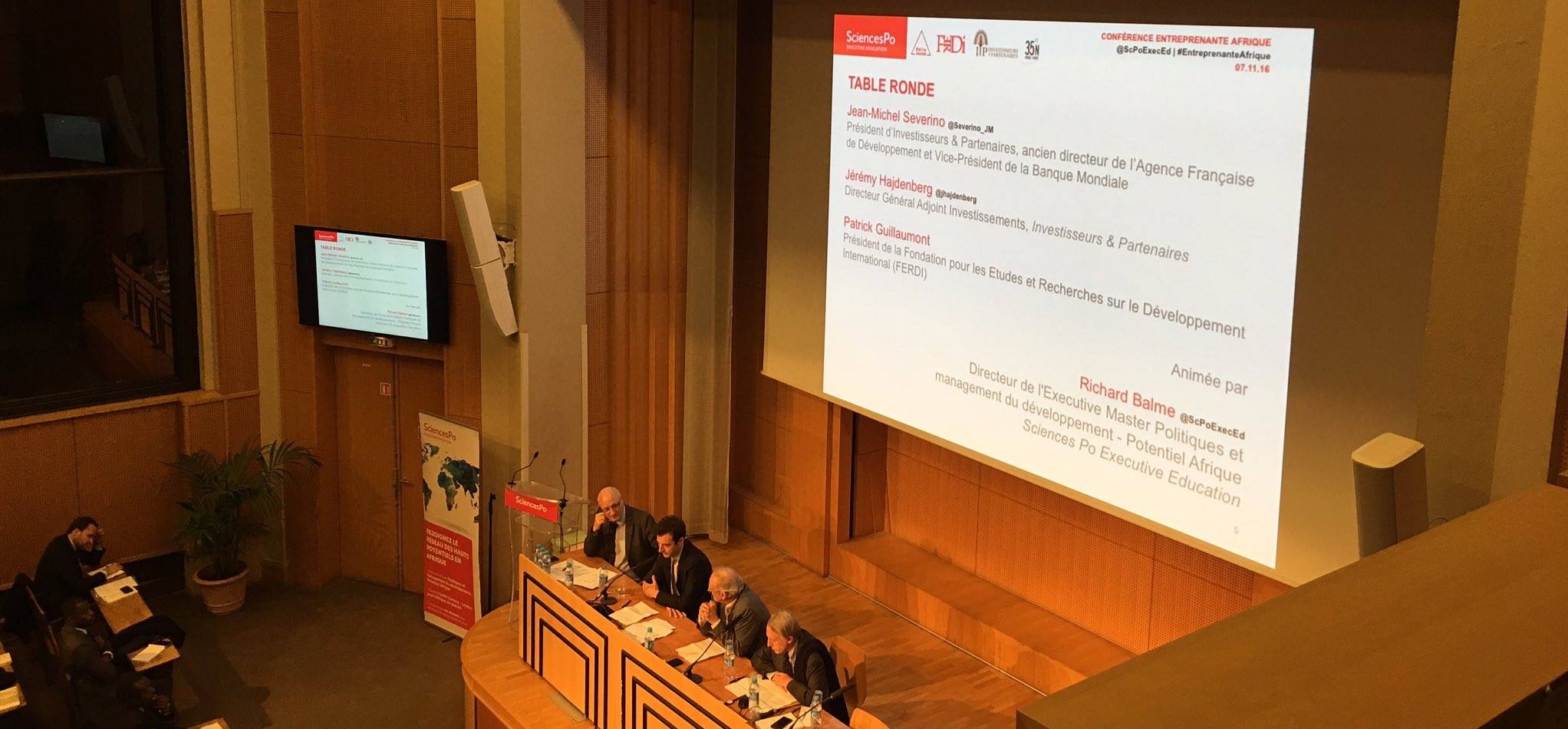
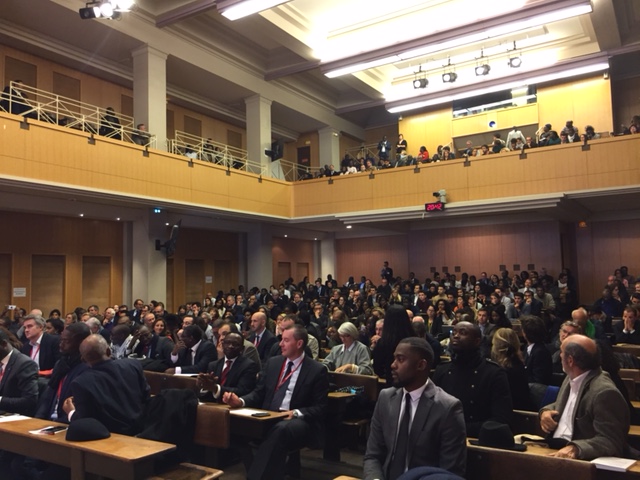
From October 19 to 21, Investisseurs & Partenaires, in partnership with the African Club of Entrepreneurs (Club Africain des Entrepreneurs), organizes the fifth annual meeting of its partners, gathering about fifty managers of African businesses in CEDEP, Fontainebleau. Organized in partnership with FISEA, Proparco and the European Bank of Investment, this training seminar focuses this year on communication and marketing issues and addresses a particular issue: how to build an identity that builds on the values of the company and create a differentiation on the market.


A seminar focused on branding and differenciation strategies

Based on the observation that the capacity to communicate effectively on their activities among various relevant actors lies at the heart of the SMEs’ development strategies, this year entrepreneurs’ seminar offers a two-day training on the communication and marketing best practices. Gathering around fifty I&P’s investees, the training revisits the major principles of reputation and brand policies and provides entrepreneurs with directly applicable tools to enhance their company’s value.

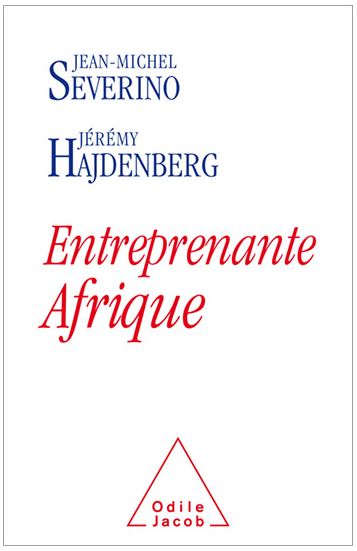
For the last two years, the seminar has been organized jointly with the CEDEP, a club training on strategy, management and marketing matters dedicated to executives. The training is provided by Frank AZIMONT, founder of the Market Shaping Institute (a research institute on marketing matters) and CEDEP program’s Manager. He is a partner of Gauthier BOCHE, FutureBrand’s strategy and development manager. Both of them present new strategies to face the specific challenges meet by the attending enterprises. Besides the training sessions, the participants also participate to various activities, among which the General Meeting of the African Club of Entrepreneurs and the introduction of book “Enterprising Africa” written by Jean-Michel Severino and Jérémy Hajdenberg last September.


Training African managers: a key motivation leading to the creation of the African Club of Entrepreneurs

Since 2012, I&P has launched an annual training seminar on the major issues its investees are facing. In addition to strengthening entrepreneurs’ skills on relevant subjects (human resources, management information system, finance, CSR etc.), it provides an opportunity to exchange information, best practices and experiences. "Strengthening the skills of African managers on daily topics is the primary objective of these seminars. The African Club of Entrepreneurs is the result of this initiative in order to create a long-term platform to exchange information and best practices " explains Sidi Khalifou, CEO of CDS and Secretary General of the Club.

After the constituent General Assembly of October 2015, the Club was officially launched at the African Development Bank in Abidjan, June 2nd, 2016, during an event bringing together prominent personalities of the financial sector and the impact investing sector (Laurent Farge, Regional Representative in Western Africa of Proparco, Robert Masumbuko and Robert Zegers from the African Development Bank, and Jean-Michel Severino, CEO of I&P) about the importance of advocacy for African entrepreneurship today.

A year after its founding decision, the Club already presents a good track-record: it presented five member enterprises at the Lead Campus (a training organized by Sciences Po Paris, Cape Town University, and Dakar ISM), it organized various national meetings and received numerous partnership offers which are now in course of concretization. Moreover, Dr Elisabeth Kacou questioned public decision makers on policies supporting SMEs and local production. Next year will be dedicated to raising funds to set up programs and develop the networks’ offer, in line with the commitment for sustainable entrepreneurship in Africa.


Partners


The African Club of Entrepreneurs gathers a network of entrepreneurs operating in Sub-Saharan Africa and aims at developing business opportunities for its members and promoting entrepreneurship on the continent. The Club is currently made of I&P partner companies and its members are based in fifteen countries in West and Central Africa and the Indian Ocean.


Investisseurs & Partenaires (I&P) is an impact investing group dedicated to small and medium enterprises in Sub-Saharan Africa. Beyond investment, I&P provides technical and strategic support to meet the growth needs of its portfolio companies. Since its inception in 2002, I&P has supported about 60 companies operating in 15 African countries.  Created by Patrice Hoppenot and headed by Jean-Michel Severino since 2011, the I&P team comprises about thirty collaborators in Paris and in its six African offices in Cameroon, Côte d'Ivoire, Senegal, Ghana, Burkina Faso and Madagascar. 


As the bank of the European Union, the European Investment Bank (EIB) has been making available its finance and expertise in support of sound and sustainable investment projects both within and outside Europe for over 50 years. In the Africa, Caribbean and Pacific regions it has invested more than EUR 18 billion in over 1 300 projects carried out in 92 countries and regional groupings. The EIB Group provides technical assistance to improve the contribution to developing the projects that it finances and strengthen the capacities of its financial counterparts and final beneficiaries


The Investment and Support Fund for Business in Africa (FISEA), makes equity investments in businesses, banks, microfinance institutions and investment funds in Sub-Saharan Africa. FISEA has a five-year investment target of 250 million euros, in addition to private investment funds. It targets the most unstable or post-crisis regions, as well as sectors traditionally bypassed by investors, such as agriculture, microfinance and health care. A 5 million euros grant has been earmarked for technical assistance to companies in its investment portfolio.


CEDEP brings together companies of diverse industries from all over the globe to share best practices, develop networks and work in the mutual interest of improving tomorrow’s organisations. With over twenty members, CEDEP welcomes over 2,000 participants to its campus every year for both traditional open enrolments programmes as well as customised company specific programmes. CEDEP is lucky to be able to carefully select its professors from a global network of over 100 top business schools and choose top speakers in their fields. The CEDEP Academic Committee innovates pedagogical methods, benchmarks and keeps CEDEP on the cutting-edge of executive education. CEDEP prides itself on serving its members to keep up with today’s every changing business complexities and offering its members a beautiful working environment designed specifically for executive education.


Du 19 au 21 octobre 2016, Investisseurs & Partenaires, en partenariat avec le Club Africain des Entrepreneurs, organise la cinquième rencontre annuelle de ses entreprises partenaires, rassemblant une cinquantaine de dirigeants d’entreprises africaines au Centre Européen d’Education Permanente (CEDEP). Organisée en collaboration avec FISEA, Proparco et la Banque Européenne d’Investissement, cette rencontre aborde les enjeux clés liés à la communication et au marketing. L’ensemble du séminaire répond à une problématique : comment construire une identité qui s’inspire des valeurs de l’entreprise et qui assoit une différenciation créatrice de la valeur.


Un séminaire axé sur les stratégies de différenciation et de marque

Partant du constat que la capacité à communiquer sur son activité de manière effective et auprès des différents publics pertinents se situe au cœur des stratégies de développement des PME, la nouvelle édition du séminaire entrepreneurs propose deux journées de formation aux bonnes pratiques en matière de communication et de marketing. Réunissant une cinquantaine d’entrepreneurs accompagnés par I&P, la formation permet de revenir sur les grands principes des politiques de réputation et de marque et de fournir aux entrepreneurs des outils directement applicables, dans une optique de création de valeur au sein de leurs entreprises.


Pour la deuxième année consécutive, le séminaire est organisé en collaboration avec le CEDEP, Centre de formation des cadres dirigeants des entreprises du CAC 40 sur des sujets liés à la stratégie, au management et au marketing. La formation est assurée par Frank AZIMONT, Fondateur du Market Shaping Institute, institut de recherche sur les enjeux marketing et Directeur de programme au CEDEP. Il est associé à Gauthier BOCHE, Directeur de la Stratégie et du Développement au sein de FutureBrand. Tous deux présentent de nouvelles stratégies répondant aux enjeux spécifiques rencontrés par les entreprises présentes. En marge des sessions de formation, les participants sont également réunis autour d’autres activités, incluant notamment l’Assemblée Générale du Club Africain des Entrepreneurs et une présentation du livre « Entreprenante Afrique » publié par Jean-Michel Severino et Jérémy Hajdenberg en septembre dernier.


La formation, pilier fondateur à l'origine de la création du Club Africain des Entrepreneurs

I&P a lancé en 2012 l’initiative d’un séminaire de formation annuel sur des thématiques porteuses d’enjeux majeurs pour les PME qu’elle accompagne. En plus de permettre le renforcement des compétences des entrepreneurs sur les sujets étudiés (ressources humaines, système d’information et de gestion, finance, RSE etc.), elle a permis d’échanger des informations, des meilleures pratiques et des expériences. «Permettre le renforcement des compétences des entrepreneurs africains sur des thématiques auxquelles ils sont confrontés au quotidien est l’objectif premier de ces séminaires. Le Club Africain des Entrepreneurs est directement issu de cette démarche afin de créer une plateforme d’échange d’informations et des meilleures pratiques pour les dirigeants d’entreprises africains » explique Sidi Khalifou, Directeur général de CDS et Secrétaire général du Club africain des entrepreneurs.

Après l’Assemblée Générale constitutive d’octobre 2015, le Club a été officiellement lancé dans les locaux de la Banque Africaine de Développement à Abidjan le 2 Juin 2016, au cours d’un événement réunissant d’éminentes personnalités de la finance et de l’impact investing (Laurent Farge, Représentant Régional de Proparco en Afrique de l’Ouest, Robert Masumbuko et Robert Zegers de la Banque Africaine de Développement, ainsi que Jean-Michel Severino, Président d’I&P) autour de l’importance du plaidoyer pour l’entrepreneuriat africain de nos jours.

Un an après la décision de constitution, le Club présente déjà un bilan positif: participation de cinq entreprises membres au Lead Campus (formation proposée par Sciences Po Paris, l’Université de Cape Town et l’ISM de Dakar), interpellation des décideurs publics par la Présidente du Club Dr Elisabeth Kacou sur les politiques de soutien aux PME et la promotion des produits locaux, réalisation de plusieurs rencontres nationales et réception de nombreuses marques d’intérêts pour des partenariats qui sont actuellement en cours de concrétisation.  L’année 2017 sera dédiée à une levée de fonds pour permettre la mise en place de programmes et le développement de l’offre du réseau, dans la lignée de l’engagement des membres en faveur d’un entrepreneuriat durable en Afrique.


Partenaires

Le Club Africain des Entrepreneurs est une organisation panafricaine de droit ivoirien visant à promouvoir l’entrepreneuriat en Afrique, à développer les opportunités économiques des membres, à renforcer les ressources humaines, à permettre des synergies et à contribuer à l’émergence d’une classe entrepreneuriale de qualité et. Le Club propose aux entreprises membres des services à forte valeur ajoutée, regroupés autour de quatre piliers fondamentaux : business développement, formation, plaidoyer et vie de réseau.

Investisseurs & Partenaires (I&P) est un groupe d’impact investing dédié aux petites et moyennes entreprises d’Afrique Subsaharienne. I&P est un partenaire actif qui en plus d’un investissement financier, apporte ses compétences en stratégie, en finance et en management pour accélérer la croissance de ses entreprises partenaires. Depuis sa création en 2002, I&P a investi dans près de 60 entreprises, opérant dans 15 pays africains.  Fondé par Patrice Hoppenot et dirigé par Jean‐Michel Severino depuis 2011, I&P compte une trentaine de collaborateurs basés à Paris et dans six bureaux africains (Cameroun, Côte d’Ivoire, Sénégal, Ghana, Burkina Faso et Madagascar).

En tant que banque de l’Union européenne, la Banque Européenne d’Investissement (BEI) apporte ses financements et son savoir-faire à l’appui de projets d’investissement solides et durables à l’intérieur comme à l’extérieur de l’Europe depuis plus de 50 ans. Dans les régions d’Afrique, des Caraïbes et du Pacifique elle a investi plus de 18 milliards d’EUR dans plus de 1 300 projets réalisés dans 92 pays et regroupements régionaux. Le Groupe BEI fournit de l’assistance technique pour améliorer la contribution au développement des projets qu’il finance et renforcer les capacités de ses contreparties financières et de ses bénéficiaires finaux.

 FISEA est un fonds d’investissement destiné à prendre des participations dans des entreprises, des banques, des institutions de microfinance et des fonds d’investissement déployant leur activité en Afrique subsaharienne. Avec un objectif de 250 M€ d'investissement, FISEA est l’un des dispositifs majeurs de l’Initiative française pour la croissance et l’emploi en Afrique. Détenu par l'AFD et géré par Proparco, FISEA cible des régions instables ou en sortie de crise, ainsi que des secteurs traditionnellement délaissés des investisseurs ou des populations vulnérables. Une attention particulière est portée au développement des petites et moyennes entreprises.

Le CEDEP regroupe des entreprises de diverses industries pour partager les meilleures pratiques, développer des réseaux et travailler dans l'intérêt mutuel de l'amélioration des organisations de demain. Avec plus de vingt membres, le CEDEP accueille chaque année plus de 2000 participants sur son campus pour des programmes traditionnels ‘open enrolment’, ainsi que des programmes sur-mesure. Le CEDEP a à sa disposition un vaste réseau international de professeurs et d’intervenants de haut niveau qui lui permet de sélectionner les enseignants les plus appropriés pour un programme donné. Le CEDEP se veut être en adéquation avec la constante évolution du monde des affaires et offre à ses membres un bel environnement de travail (avec son propre campus) spécifiquement pour la formation des cadres.


Dans la presse

• "Un seminaire I&P pour former 50 entrepreneurs africains aux bonnes pratiques du marketing et de la communication", Agence Ecofin

• "Management: une cinquantaine d'entrepreneurs instruits sur le marketing et la communication", Fraternité Matin


The Land of African Business organizes in Paris the second edition of its annual meetings. The LAB is a flagship event for Africa, proposing unique meetings and innovative solutions.

Alongside the presentations by 50 start-up finalists African Rethink, several panels are provided, including one on finance mutation in Africa with Jean-Michel Severino, President of Investisseurs & Partenaires.

Find out more on the event


Focus: Panel n° 4 - African finance mutation

Thursday, October 20, from 10:15 am to 11 am

“Between structuring African companies and raising capital for investment from private equity, Africa offers new financing and draws an innovative role for investment funds and banks, but the world of capital providers is sometimes too distant from African entrepreneurs. What concrete actions we must implement to act for the emergence of a more favorable context for entrepreneurs and private capital to African businesses? What are the available tools on the continent?”

Table opened by: Mr. Jilles DJON, Director of Business Operations, African Room of Trade in China.

Speakers:

Estelle BRACK, Economist specializing in banking and finance, Université Panthéon-Assas and iReMMO, France

Jean-Michel Severino, CEO of I&P, France

Mr. Jean-Luc Koffi Vovor, Co-founder of Partners Kusuntu, France

Lionel Zinsou, President of AfricaFrance, member of Supervisory Board of PAI, Benin

Moderator: Mr. Yann QUEINNEC, CEO and founder of Affectio Mutandi, France


About the Land of African Business (LAB)

Founded in 2014, the think tank Land of African Business -LAB- benefits from its members expertise and opportunities of action for Africa. One of its purposes is to connect stakeholders committed to taking up the challenges of African development and growth. Thanks to its first edition during COP21, in Paris, the LAB gained a large visibility on the international stage.

The LAB assembles and sensitizes African economic, academic, associative, institutional and media players to the transformation of lifestyles and governance. The think tank, focused on a plural “Africas”, works towards the mutation of the society through sustainable and inclusive development models, contributing to growth sharing and harmony between populations. It puts enterprise and innovation in the core of the debate, with a cross-disciplinary approach based on partnerships.


Le Land of African Business organise à Paris sa seconde édition de rencontres. Le LAB se veut un lieu unique de rencontres et de solutions innovantes entièrement dédié aux enjeux africains.

En marge des présentations par les 50 start-up finalistes du concours African Rethink, plusieurs tables rondes sont organisées, dont une table ronde sur la finance africaine en mutation avec Jean-Michel Severino, Président d’Investisseurs & Partenaires.

Plus d’infos sur l’évènement


Focus : Table ronde n°4 - La finance africaine en mutation

Jeudi 20 octobre-de 10h15 à 11h 15

« Entre Structuration des entreprises africaines et levée de capitaux par les investissements issus de fonds de capital investissement, l’Afrique s’offre des nouveaux financements et dessine un rôle innovant pour les fonds d’investissements et les banques, mais les offreurs de capitaux du monde entier sont parfois trop éloignés des entrepreneurs africains. Quelles actions concrètes doit-on mettre en place afin d’agir pour l’émergence d’un contexte favorable à plus d’entrepreneurs et de capitaux privés dans les entreprises africaines ? Quels sont les outils disponibles présents sur le continent ? »

Ouverture de table par : M. Jilles DJON, Directeur des opérations commerciales, Chambre africaine du commerce en Chine.

Intervenants :

Mme Estelle BRACK, Economiste spécialiste des questions bancaires et financières, Université Panthéon-Assas et à l’iReMMO, France

M. Jean-Michel SEVERINO, Directeur de I&P, France

M. Jean-Luc KOFFI VOVOR, Co-fondateur de Kusuntu Partners, France

M. Lionel ZINSOU, Président d’AfricaFrance, membre du Conseil de Surveillance de PAI, Bénin

Modérateur : M. Yann QUEINNEC, Directeur Général et fondateur d’Affectio Mutandi, France


A propos du Land of African Business (LAB)

Fondé en 2014, le Land of African Business – LAB – est un cercle de réflexion riche de l’expertise de ses membres et des opportunités d’actions pour l’Afrique. Ambitieux dans la mise en relation d’acteurs concernés par les défis émergents du développement et de la croissance africaine, il a acquis, grâce à sa 1ère édition lors de la COP21 à Paris, une forte reconnaissance sur la scène internationale. Le LAB rassemble et sensibilise au changement global de nos modes de vie et de gouvernance les acteurs économiques, académiques, associatifs, institutionnels et médiatiques du continent africain.

Ce think-tank, tout particulièrement tourné vers « les Afriques », œuvre pour la transformation des sociétés vers de nouveaux modèles de développement plus respectueux de l’Homme, qui contribuent à une croissance partagée et harmonieuse entre les populations.


Le LAB met l’entreprise et l’innovation au cœur du débat. Il réunit personnalités économiques, médiatiques, sociales, culturelles, associatives et politiques avec une approche transdisciplinaire centrée sur les partenariats.

The Blog Private Sector and Development has recently published an article by Eric and Cyril Pignot Nkontchou, co-founders of Enko education, supported by IPAE since August 2016. Enko Education aims to build one of the largest African networks of private schools in Sub-Saharan Africa, with a strong emphasis on Francophone countries.

Facing the challenges of education and training, a prerequisite to the development of Africa, the two entrepreneurs have declined the challenges facing the continent including the quality of education, low recognition of local diplomas, the low representation of African students in the best international universities.

► Read the article

► Read more on Enko Education


Extracts


• On education in Africa

“The goal of universal primary school enrollment in the wake of the Millennium Development Goals, focused efforts for certainly encouraging results: the net primary school enrollment increased from 58% in 1999 to 3 76% in 2010.”

“But once out of primary school, two out of three students do not see the benches of the college or high school. Those passing 6th (or equivalent) find themselves in overcrowded classrooms for up to 120 or 150 students, as the High School Etoug Ebe Yaounde 4, receive ultra-traditional education focused primarily on memorization and pass national exams little delivering standardized unrecognized diplomas outside the borders of their country.”


• Under-representation and mobility of African students

“Rob Garcia, director of admissions at the Massachusetts Institute of Technology (MIT), says that "the records of the Sub-Saharan African student applications represent less than 1% of all applications ... more among the applications we receive, few who meet conventional standards required by US universities "

“Traditional teaching methods centered around the teacher and based on memorization, still practiced by the majority of sub-Saharan African schools poorly suited to international requirements analysis and personal reflection where students are clearly encouraged. In much of the continent, secondary education requires an overhaul of curricula, methods of organization of examinations and teacher training systems.”


• The private sector

“Private actors have a key role to play in the development of educational provision in emerging countries. The number of private schools is currently growing faster than the public schools.”

“In China, the network Dipont epitomizes this growth: the 6000 student Dipont schools benefit from international programs leading to the International Baccalaureate (IB), the A-level Cambridge, Advanced Placement, internationally recognized diplomas. These schools, originally born to serve the people, remain reserved for elite with school fees average 12,000 euros per year.”


About: “Private Sector and Development”

Through their day-to-day involvement in the economies of low-income countries, private-sector operators play an essential role in the development of emerging countries. The Private Sector & Development (PS&D) blog aims at emphasizing the solutions imagined and set-up by these operators to overcome the challenges of emerging markets. The blog offers the possibility of sharing additional insights and views on the topics addressed by the magazine. By posting the operational experiences of operators from the private sector, the blog PS&D aims at acting as a catalyst for the development of a sustainable private sector that will play a structuring role in low-income countries.

http://blog.private-sector-and-development.com/


Le blog Secteur privé et Développement a publié une tribune d’Éric Pignot et Cyrille Nkontchou, co-fondateurs d’Enko éducation, soutenu par le fonds IPAE depuis août 2016. Enko Education ambitionne de structurer l’un des plus larges réseaux de lycées privés en Afrique Sub-Saharienne, en portant une attention particulière aux pays d’Afrique francophone.

Face aux enjeux de l’éducation et de la formation, condition sine qua non au développement de l’Afrique, les deux entrepreneurs passent en revue les défis qui attendent le continent notamment sur la qualité de l’enseignement, la faible reconnaissance des diplômes locaux, le faible taux de représentativité des étudiants africains dans les meilleures universités internationales.

► Découvrir l’interview

► En savoir plus sur Enko Education


Quelques extraits :

• Sur l’enseignement en Afrique

"L’objectif d’une scolarisation universelle en primaire, dans le sillage des Objectifs de Développement du Millénaire, a concentré les efforts pour des résultats certes encourageants : le taux net de scolarisation en primaire est passé de 58% 3 en 1999 à 76% en 2010."

"Mais une fois sortis du primaire, deux élèves sur trois ne voient pas les bancs du collège ou du lycée. Ceux passant en 6ème (ou équivalent) se retrouvent dans des classes surpeuplées accueillant jusqu’à 120 ou 150 élèves, comme au Lycée d’Etoug Ebe à Yaoundé 4, reçoivent un enseignement ultra traditionnel axé essentiellement sur la mémorisation, et passent des examens nationaux peu standardisés délivrant des diplômes non reconnus en dehors des frontières de leur pays."


• Sous-représentation et mobilité des étudiants africains

"Rob Garcia, directeur des admissions au Massachussetts Institute of Technology (MIT), explique que « les dossiers de candidatures d’étudiants d’Afrique Subsaharienne représentent moins de 1% de l’ensemble des candidatures … de plus, parmi les candidatures que nous recevons, rares sont celles qui respectent les standards classiques demandés par les universités américaines »"

"Les méthodes d’enseignement traditionnelles centrées autour du professeur et basées sur la mémorisation, encore pratiquées par la majorité des écoles d’Afrique subsaharienne conviennent peu aux exigences internationales où analyse et réflexion personnelle des étudiants sont clairement encouragées. Dans la majeure partie des pays du continent, l’enseignement secondaire nécessite une refonte en profondeur des curriculums, de méthodes d’organisation des examens et des systèmes de formations d’enseignants."


• Sur le rôle du secteur privé

"Les acteurs privés ont un rôle décisif à jouer dans le développement de l’offre éducative dans les pays émergents. Le nombre d’écoles privées y grandit actuellement plus rapidement que celui des écoles publiques."

"En Chine, le réseau Dipont incarne cette croissance : les 6 000 étudiants des écoles Dipont bénéficient de programmes internationaux les menant au Baccalauréat International (IB), au A-level de Cambridge, au Advanced Placement, des diplômes reconnus mondialement. Ces écoles, nées initialement pour servir les populations, restent réservées à une élite avec des frais de scolarités moyens de 12,000 euros par an."


A propos

Les opérateurs du secteur privé, acteurs essentiels du développement des pays à bas revenus, ont une expérience directe et concrète des problématiques auxquelles sont confrontées les économies de ces pays. Dans le but de valoriser cette expérience, le blog Secteur Privé & Développement (SP&D) accueille les contributions de ces opérateurs en mettant en avant les solutions mises en œuvre pour dépasser les contraintes propres à ces pays. Les thématiques abordées sont celles des différents numéros de la revue Secteur Privé & Développement que ce blog se propose de prolonger. En diffusant les expériences opérationnelles d’acteurs du secteur privé, le blog SP&D vise à catalyser le développement d’un secteur privé soutenable et structurant dans les pays à bas revenu.

http://blog.secteur-prive-developpement.fr/


The FACTS Reports magazine published an article devoted to the company CDS, specialized in water and energy access in Mauritania.

For almost ten years, CDS has been operating water and electricity off-grid networks in remote villages in Mauritania. Chosen by the authorities through several calls for tender, CDS operates and maintains the infrastructure, as well as invoicing and collection from customers. This approach will make it possible to foster rigorous and experienced national operators liable to play a growing role in the professionalization of the sector.

► Read the article


Extracts:

The political context of Mauritania

For over a decade, the Mauritanian authorities have been committed to an ambitious policy of reform of the water and electricity sectors with a view to combating poverty.


CDS, a private company seeking to give access to energy to all

Sidi Khalifou is a Mauritanian engineer and entrepreneur trained in France. At the end of several entrepreneurial trials, in particular design offices and NGOs, Sidi Khalifou took over CDS, a family business, and developed it, focusing its activity on access for all to water and energy, particularly from renewable sources.


Download the review


About

Field Actions Science Reports (FACTS Reports) is a unique forum that will publish manuscripts and opinion pieces related to field-based activities within various topic areas: economics, health, education, agriculture, urban planning and environmental issues. FACTS Reports will focus on activities in developing countries and impoverished areas of developed countries. Articles should describe actions that are useful and can be replicated. This is the major criteria for publication.

FACTS Reports promotes an essential process of capitalization of knowledge related to field actions at an international level. It provides a neutral and independent platform for spreading good practices. It is an international, open access, peer-reviewed journal with a requirement that peers work in the field themselves.

► Read more


La revue FACTS Reports publie un article consacré à l’entreprise CDS, spécialisée dans la distribution d’eau et d’énergie en Mauritanie.

Depuis près de 10 ans, CDS exploite et distribue de l’eau et de l’électricité dans les villages reculés en Mauritanie. Choisie par les autorités à travers plusieurs appels d’offres, l’entreprise exploite et entretient plusieurs infrastructures, de même que la facturation et la collecte auprès des clients. Cette approche permet d’encourager les opérateurs nationaux rigoureux et expérimentés susceptibles de jouer un rôle croissant dans la professionnalisation du secteur.

Découvrir l’article


Quelques extraits

Le contexte politique de la Mauritanie

« Depuis plus d'une décennie, les autorités mauritaniennes se sont engagées à une politique ambitieuse de réforme des secteurs de l'eau et de l'électricité en vue de la lutte contre la pauvreté(…) »


CDS, une société privée qui cherche à donner accès à l'énergie à tous

« Sidi Khalifou est un ingénieur mauritanien et entrepreneur formé en France. A la fin de plusieurs essais d'entreprise, notamment les bureaux d'études et des ONG, Sidi Khalifou a repris la CDS, une entreprise familiale, et l'a développé, en se concentrant son activité sur l'accès pour tous à l'eau et de l'énergie, en particulier à partir de sources renouvelables. »


Télécharger la revue


A propos

L’initiative FACTS a été initiée et est soutenue par Philippe Kourilsky, Professeur au Collège de France à Paris et Directeur Général de l'Institut Pasteur de 2000 à 2005. Field Actions Science Reports (FACTS Reports) couvre plusieurs domaines liés au développement : santé, économie, environnement, agriculture, etc. Pour chaque thématique, santé, économie, etc., est constitué un Comité éditorial composé de membres expérimentés ayant une grande expertise du domaine en question.

Les articles font l’objet d’une évaluation par les pairs. Les principaux critères de publication portent sur le caractère utile et reproductible des actions décrites. FACTS Reports est un outil élaboré pour être au service des acteurs de terrain. Il leur permet d’exprimer librement leurs points de vue et opinions, de communiquer, d’échanger et de coopérer avec d’autres acteurs de terrain à travers le monde mais également avec les organisations internationales, les agences de développement et société civile. FACTS Reports constitue un forum d'expression et d'échange pour les acteurs de terrain.

En savoir plus>>


The impact investing group Investisseurs & Partenaires (I&P) announces a partnership with the US Agency for International Development (USAID) to launch an innovative acceleration program in Niger, Burkina Faso and Senegal. The alliance aims to bring high potential start-ups and Small Growing Businesses (SGBs) to an “investment ready status”, with the underlying objective of building a sustainable entrepreneurial support ecosystem in these financially underserved countries. 

Read more

Dowload a short presentation of the program


An acceleration mechanism for Small Growing Businesses in the Sahel region

The Alliance between I&P and USAID is a response to one of the key obstacles facing start-ups and early-stage small and growing businesses (SGBs) in Sub-Saharan Africa: access to seed finance and investment-readiness services. In the Sahel region, seed financing mechanisms are non-existent Most SGBs face high barriers in access to finance. The SGB support ecosystem is very sparse and currently not tooled to make SGBs investment-ready.
 
The alliance aims to bridge the gap of investment readiness for SGBs in the Sahel region with a focus in Niger, Senegal and Burkina Faso. Its main objective is to facilitate access to finance for 52 SGBs in the next three years. The program will use a combination of seed funding, in the form of small no-interest no-collateral loans, and high-touch coaching by expert investment teams in order to maximize the chances of the SGBs to raise follow-on funding.
 
USAID’s support will generate a strong leverage effect on African private capital, with the objective to unlock USD 5.6 million in equity and debt investments from investors, banks and business angels into early-stage businesses requiring individual investments between 40 000 USD and 400 000 USD.


The message of Rob Schneider, Division Chief, U.S. Global Development Lab, USAID

"At the U.S. Agency for International Development (USAID), we know that small and growing businesses (SGBs) are critical drivers of economic growth but are often unable to access the capital they need. They require small investments—between $50,000 and $500,000—but the high costs of due diligence, lack of cash flow, and limited collateral often prevent traditional financial institutions from providing early- and seed-stage funding.

Along with many others in this field, we believe that mobilizing local capital and local talent may be an answer to this problem. Together, USAID and I&P are responding to one of the biggest challenges in impact investing—risky early- and seed-stage investments—by creating a model for SGB support to more effectively find and connect local private capital with promising SGBs and investment opportunities.

Through the U.S. Global Development Lab’s Partnering to Accelerate Entrepreneurship (PACE) Initiative, we are partnering to  support three locally managed and locally funded investment funds, which will accelerate growth for 52 SGBs through seed funding, coaching, and networking and unlock $5.6 million in investments in West Africa.

In this new partnership model, these investment funds provide pre-investment services that promising entrepreneurs need, such as financial record keeping and business plan support. These investment-ready SGBs will be better prepared to receive capital from I&P’s three indigenous funds—Teranga Capital, Sinergi Niger, and Sinergi Burkina in Sénégal, Niger, and Burkina Faso respectively—which are better situated to address investment challenges  than their international counterparts.  Their on-the-ground fund managers have a nuanced understanding of the regional entrepreneurial ecosystem and their hands-on approach deploys local capital efficiently.

Together, as we support SGBs receiving local private capital managed by local fund managers, I&P and USAID are paving the way for sustainable early-stage investment models, building a market for SGB investment-readiness services in West Africa, and unlocking the potential of promising enterprises for greater growth in the region."


The partners of the project

The partnership is coordinated by Investisseurs & Partenaires (I&P), an impact investing group that has a strong footprint and experience in West Africa, and is implemented by Sinergi Niger, Sinergi Burkina and Teranga Capital, three in-country impact funds sponsored by I&P. “We have a sound knowledge of the financing challenges for SGBs in the Sahel region and we have a good investment track record. Throughout our investments we have proven that our investment model based on partnerships between international and local financial institutions, business angels as well as corporates has positive development impact.” said Jean-Michel Severino, President of Investisseurs & Partenaires (I&P).  Sinergi Niger, Sinergi Burkina and Teranga Capital invest in start-ups, early-stage and small growing businesses with a strong growth and impact potential and that have financing needs between 40,000 and 400,000 USD. Together they have already financed 10 SGBs, and thanks to the program they plan to make 20+ new investments in the next 3 years.
 
The project will support USAID’s development objectives in the target countries by focusing on SGBs with high developmental impact, and in particular by investing in SGBs active in the value chains of agriculture, health, education and essential goods and services.

Sinergi Niger's team (c) Béchir Malum


About

The Partnering to Accelerate Entrepreneurship (PACE) Initiative aims to catalyze private-sector investment into early-stage enterprises and identify innovative models or approaches that help entrepreneurs bridge the pioneer gap – thus unlocking the potential of thousands of promising enterprises around the world.

Working in partnership with over 40 incubators, accelerators, and seed-stage impact investors, USAID’s U.S. Global Development Lab has created seventeen public-private partnerships dedicated to testing ways to bridge this gap and foster entrepreneurship. These partnerships are expected to leverage $100 million in combined public and private investments over their lifetimes.